The Insider - May 2026
The entrepreneurial doldrums, how we treat technology, and the benefits of bad grammar.
The entrepreneurial doldrums, how we treat technology, and the benefits of bad grammar.

Hi everyone,
Welcome to the May edition of the Insider. Do you know someone who would enjoy the Insider? Forward this email to them, and they can subscribe here.
Spend enough time as an entrepreneur, and you will be visited by the doldrums. Their arrival is as assured as the days when an entrepreneur feels unstoppable, when the winds of progress begin to swell at their back and their inner monologue first flirts with the idea that they’re on the precipice of greatness. But the physics of the entrepreneurial journey require that, from time to time, the feeling of unstoppable momentum must have an equal and opposite reaction: the sense of being nowhere—utterly adrift, listless, and, worst of all, insecure about anything and everything. These are the doldrums, and I found myself in one of their stultifying eddies last month. The emails I was waiting for didn’t come in. The things I thought wouldn’t take much time seemed to stretch over multiple days. My focus was thin. My voice, timid. What happened?
What I’ve learned about the doldrums is that you can’t take them too seriously. They visit you, and then they move on, and before you know it, you’re back, baby, you’re back. But sometimes there’s a lesson they leave for you, and it’s wise to be on the lookout for it. In that maddening stillness, if you’re lucky, you might just catch a glimpse of yourself that was impossible to see when you were in motion.
There’s new research examining the correlation between politeness and chatbot output. One set of studies found that encouraging your chatbot not only produces better results, but also helps to avoid the unfortunate situation in which the chatbot becomes increasingly desperate and decides to cheat, lie, or both. Others have found the exact opposite: that putting pressure on a chatbot makes it perform better. Last year, Google co-founder Sergey Brin said, “We don’t circulate this too much in the AI community—not just our models but all models—tend to do better if you threaten them…with physical violence.”
I found myself bothered by Brin’s quote, even as I tried to reassure myself that these are only tools and we should be careful not to anthropomorphize them. But there is a line we cross within ourselves when we become accustomed to threatening anything with violence. Sherry Turkle, the director of the Massachusetts Institute of Technology Initiative on Technology and Self, found that children who grow up barking commands at a smart speaker in their house (like Alexa or Siri) are less respectful later in life. As we shape and train the technologies in our lives, they, in turn, are shaping and training us.
Have you heard of Sinceerly? It’s a new little piece of software that makes your writing sound more human. Its founder calls it the “Anti-Grammarly.” You start out by writing something like:
“I wanted to ask about potential ways we could work together. I think there's real value in exploring how we'd collaborate going forward. Let me know if you're available for a quick call soon.”
And Sinceerly cleans it up so it reads:
“think we should connect. potential here. quick call this week? lmk”
Grammarly neutralizes all the human imperfections in your writing, polishing your prose so it’s without blemish—which also means it’s more likely to be considered AI-generated. The trend now is to reintroduce grammatical mistakes and short hand because AI would never write like that. In a few years, we’ve gone from including “Sent from my iPhone—please excuse typos and brevity” to hoping that our communications are full of typos, brevity, and other grammatical misdemeanors.
My mother—who sent me as a pre-teen to a summer “grammar camp” where all grammatical mistakes were drilled out of me by stiff grammarians who meted out their corrections with syntactic sanctimony—has no time for bad grammar, let alone performatively bad grammar that functions as a virtual proof-of-life check.
What are we to do? dunno - its hard out their rn.
But Sinceerly (whose annoying misspelling is maybe the point?) is best used to bastardize our email copy, not for longer-form essays.
Part of the issue is that so much “thought leadership” isn’t actually that thoughtful or interesting. If we’re honest, we’re trying to force it to keep publishing content, and we lean on AI to help us crank out decidedly average but grammatically impeccable stuff. Produce error-free but delightful writing, like Caity Weaver has done in her Atlantic article on the best free bread in America (see below), and people will read it. Like most things, there's a flight to quality.
The other issue, perhaps, is that we’re trying to reach people who don’t know us, and we need to break through this crust of AI slop that’s calcified across so many channels.
If we need to get the attention of strangers and prospects, we can use bad writing to pierce through, or we can zig when everyone else is zagging.
The intrigue of the internet is its scale, but its humanity still lives in its smallest spaces. Everything in business is downstream of human-to-human trust. And in those spaces, the grammar doesn’t really matter.
A few months ago, we started receiving requests from prospective clients who wanted to continue writing their newsletters themselves, but needed help with everything else in the newsletter operation: the editing, formatting, uploading, testing, sending, performance, and audience analytics.
So we launched the Production Tier, a service that is a step down from our full-service offering. The value proposition is simple: send us your draft, and we’ll take care of everything else. No need to log in to Mailchimp or Hubspot. No hours spent trying to fiddle with formatting or guessing the winning subject lines. Your draft becomes a newsletter that goes out like clockwork.
The Production Tier has become our fastest-growing offering, and it starts at $1,000 per month. If it’s been a minute since you sent your last newsletter and your audience deserves to hear from you, we’re here to help.
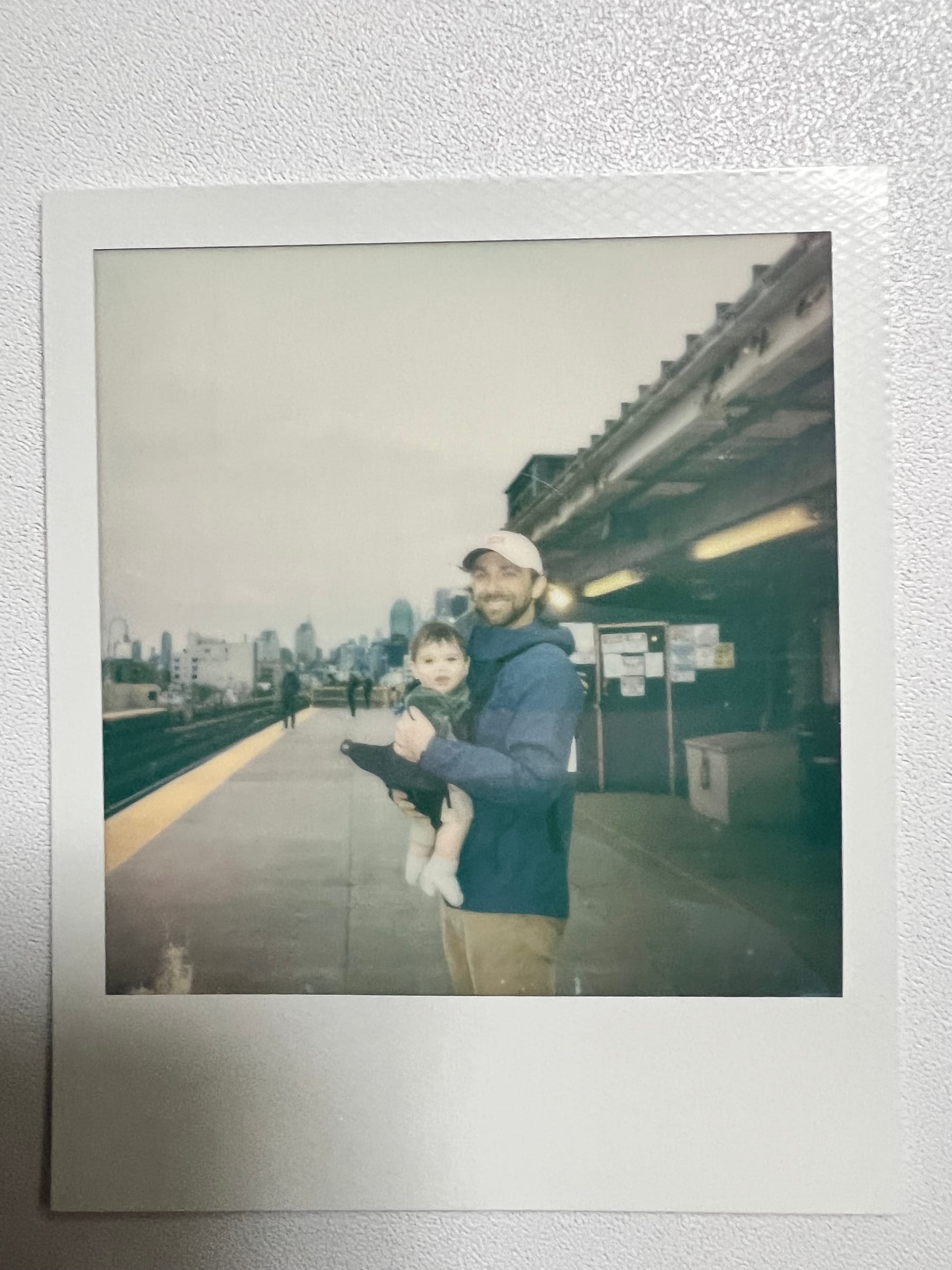
For us to spend a month in New York, we needed to figure out childcare for Emilio. They say your nanny is the most important hire you’ll ever make, so we took it seriously and set out to find someone worthy of our beloved, one-toothed, incontinent son.
We sought the counsel of wise New Yorkers. We worked the phones. We casually made our childcare needs known in Slack channels designed for no such topics. We attempted to infiltrate ingratiate ourselves into a Park Slope mom’s group chat.
We found two nannies—each from a friend who said the same thing, “We’ve trusted our kids with her for years. She’s THE BEST.” It seemed definitionally impossible that both nannies could simultaneously be “THE BEST.” And then there was the fact that we, ourselves, had already concluded that our nanny in Colorado was “THE BEST.” One of us was clearly wrong, but we didn’t dwell on it. During our first meet-and-greet with one of the nannies, I almost cried with relief: there was no doubt we could trust her with Emilio. She was warm, confident, communicative, experienced. The other meet-and-greet went just as well, and Emilio spent two days with one, two days with the other. The fifth day, every Thursday, was my day with him. A day for a father-son adventure in the city.
Each Thursday, we took on a slightly more ambitious mission. Coffee shops. Art galleries. Museums. The UPS store in SoHo. On our final Thursday, we went to the Bronx Zoo for Emilio to see the animals, and for the animals to see him. The animals were waiting to be seen on this spring day: giraffes, gorillas, zebras, a flamboyance of flamingos. Overlooking the lion enclosure, I spotted a regal male lion on the move. I tried to point him out, but Emilio was preoccupied introducing himself to some retirees from the Greatest Generation who were ambling by.
After the zoo, we made our way to the subway and found our seat for the 45-minute trip back downtown. I held him close as he peered around—taking in the ads above his head, the subway map, a fellow passenger consumed in the autoscroll of TikTok. And then slowly the thrum and clickety-clack of the train grew heavy on his eyes. He tucked his head against my chest and settled in. When I knew he was asleep, I covered his head with a blanket, but not before I noticed a small smile breaking across his face.
~~~
Signed,
Banks